
 There comes a point when most commercial spaces start to feel a little tired. Perhaps the signage has seen better days, the reception area feels dated, or the interior no longer reflects the business it represents.
The temptation might be to start planning a complete refurbishment, but is that really necessary?
Sometimes a few carefully considered improvements can make a remarkable difference. Other times, a more substantial transformation is exactly what’s needed.
The important thing is understanding what you want to achieve before deciding how much needs to change.
When a Refresh Is All You Need
Not every commercial space needs a complete overhaul to make an impact.
A refresh is often the most practical and cost-effective option for businesses whose premises are fundamentally working well but could benefit from some attention.
It might involve updating tired interior signage, introducing new wall graphics, replacing dated branding or improving the appearance of communal areas.
Even relatively small changes can help a space feel more modern and welcoming.
For businesses operating in customer-facing environments, these improvements can also make a difference to how visitors perceive the organisation.
The key is identifying which elements are letting the space down and concentrating investment where it will have the greatest impact.
When It’s Time for a Refurbishment
Sometimes cosmetic improvements simply aren’t enough.
If the layout no longer supports how a building is used, existing finishes are deteriorating or the environment isn’t meeting the needs of staff and visitors, a more comprehensive refurbishment may be the sensible option.
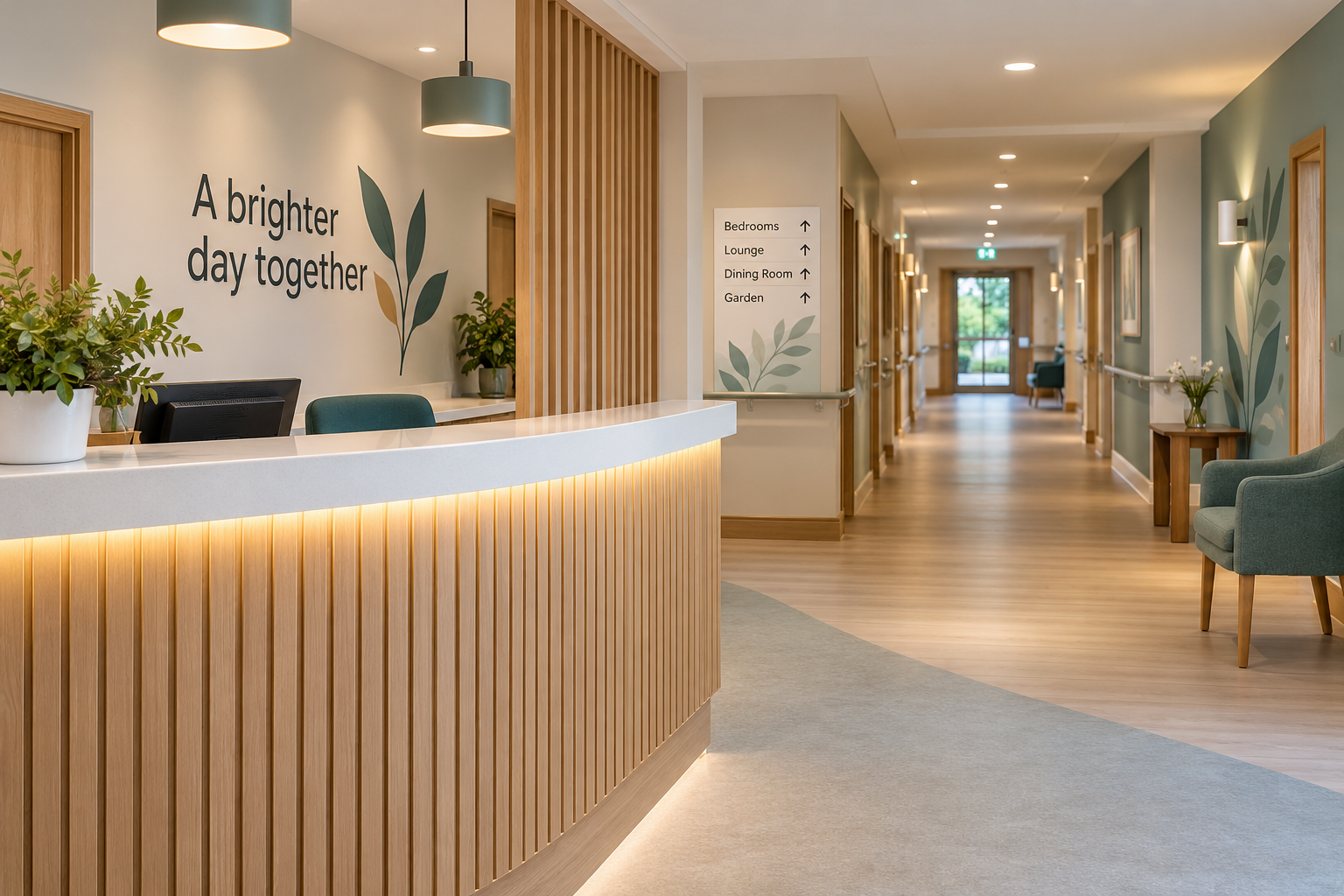
This is particularly relevant in environments such as care homes, hospices and other healthcare facilities, where the physical surroundings play an important role in everyday comfort and accessibility.
A refurbishment provides an opportunity to rethink how a space works, rather than simply updating how it looks.
Depending on the building and its requirements, this might include improvements to bedrooms, reception areas, corridors and communal spaces.
It can also be an opportunity to review wayfinding signage and environmental graphics, helping create a more consistent and intuitive experience throughout the premises.
Of course, refurbishment projects need careful planning, particularly in operational buildings where disruption must be kept to a minimum.
Taking the time to establish priorities early can help ensure the finished environment delivers lasting value.
When Your Premises Need to Reflect a Rebrand
A business rebrand often begins with a new visual identity, but bringing that identity into a physical environment can be a much bigger undertaking.
Your website and marketing materials may have been updated, but what happens when someone visits your premises?
If the exterior signage still features the previous logo or the interior graphics no longer reflect the organisation’s identity, the experience can feel disconnected.
A successful physical rebrand considers how the new identity translates throughout the building.
Exterior signage is an obvious starting point, but internal branding, reception areas, window graphics and wayfinding systems may also need attention.
For organisations operating across multiple locations, consistency becomes even more important.
The challenge is ensuring each location reflects the updated brand while accommodating the practical requirements of individual buildings.
With the right planning, a rebrand can also present an opportunity to improve existing signage and address elements that may not have been working particularly well.
Don’t Overlook the Practicalities
Before committing to any changes, it’s worth considering how the space is actually used.
A reception area might look impressive in photographs but still be difficult for visitors to navigate. Similarly, beautifully designed signage isn’t particularly useful if people struggle to read it or understand where they’re supposed to go.
In healthcare environments, the needs of patients, residents and visitors should be central to the planning process.
Accessibility, clear navigation and appropriate materials all deserve consideration.
Budget is another important factor. Not every improvement needs to happen at once, and a phased approach can sometimes be more practical than undertaking everything simultaneously.
The aim should always be to invest in improvements that genuinely benefit the building and the people using it.
Making the Right Decision for Your Space
So, how do you know whether your premises need a refresh, refurbishment or rebrand?
Start by asking what isn’t working.
If the building functions well but looks tired, a refresh may be enough.
If the environment no longer supports the people using it, a refurbishment may be worth considering.
And if your business identity has changed, reviewing how that identity is represented throughout your premises is an important part of the rebranding process.
In reality, projects don’t always fit neatly into one category. A refurbishment might incorporate new branding, while a refresh could include improvements to existing signage and wayfinding.
What matters is finding the right solution for the space rather than committing to unnecessary work.
How Oxygen Can Help
At Oxygen Installations, we work with organisations to improve their physical environments through commercial interiors, signage and branding solutions.
Our experience includes projects within care homes, hospices and other commercial settings, where creating a welcoming and functional environment is particularly important.
We understand that every building comes with its own requirements, and the right approach isn’t always the most extensive one.
If you’re considering improvements to your premises, we’re happy to discuss your ideas and explore what’s possible.
Thinking about making changes to your space? Get in touch with the Oxygen team to discuss your next project.


